
On the eastern coast of Zealand lies Køge, a town where the transition between medieval history and maritime presence is palpable at every turn. Salty sea air from the bay sweeps through cobbled streets where merchant warehouses recall centuries of thriving overseas trade. For anyone planning a walking tour of Køge, the historic core offers a remarkably well-preserved window into bygone eras. From the early Viking Age to fierce naval conflicts in the Baltic Sea, the town played a strategic role that still shapes its urban layout today.
Merchant Spirit around the Market Square and Trading Houses
The historic center unfolds around Køge Torv. Covering nearly an entire hectare, it ranks among the largest medieval town squares in Denmark. Cobblestones stretch far beneath the open maritime sky. For centuries, the local economy thrived on the weekly markets held here; butter and grain in particular were the staple goods traded across the square to buyers from across the region.
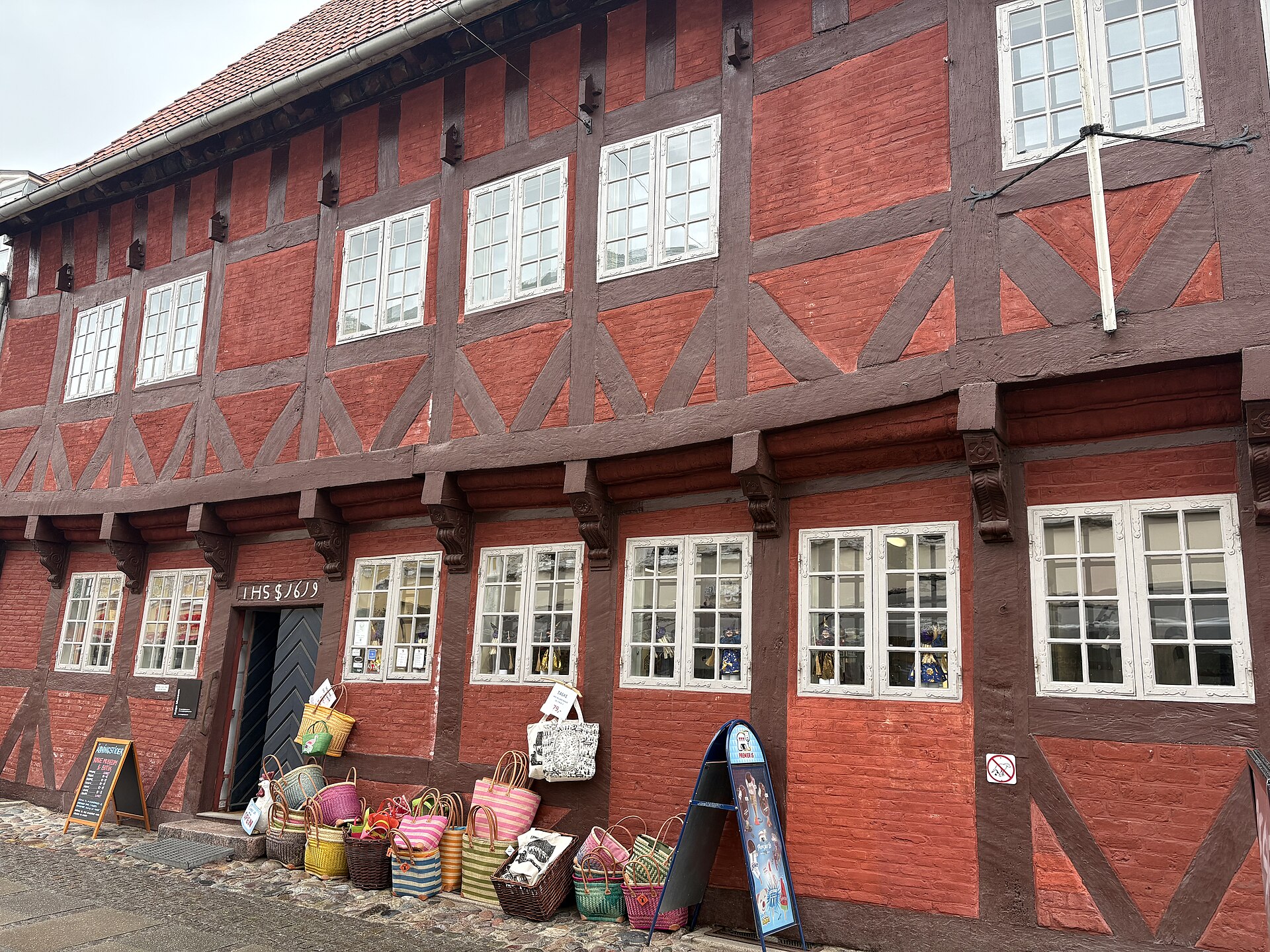
Just off the square, the route leads to Køge Museum, housed in a distinctive merchant’s residence dating from 1619. Heavy timber doors open onto a cobbled courtyard that once carried the scent of tar, spices, and newly delivered sacks of grain. Inside, the exhibition rooms preserve traces of medieval civic secrets and the witch trials that took place here in centuries past.
In an adjoining narrow lane stands Denmark’s oldest preserved half-timbered house. Dating back to 1527, the building stands out with its angled window frames and low eaves. Today, it houses a branch of the public library, keeping its centuries-old woodwork carefully protected while allowing the structure to maintain an active role in daily civic life.
Play Køge right in your browser →
Art, Railways, and Modern Perspectives
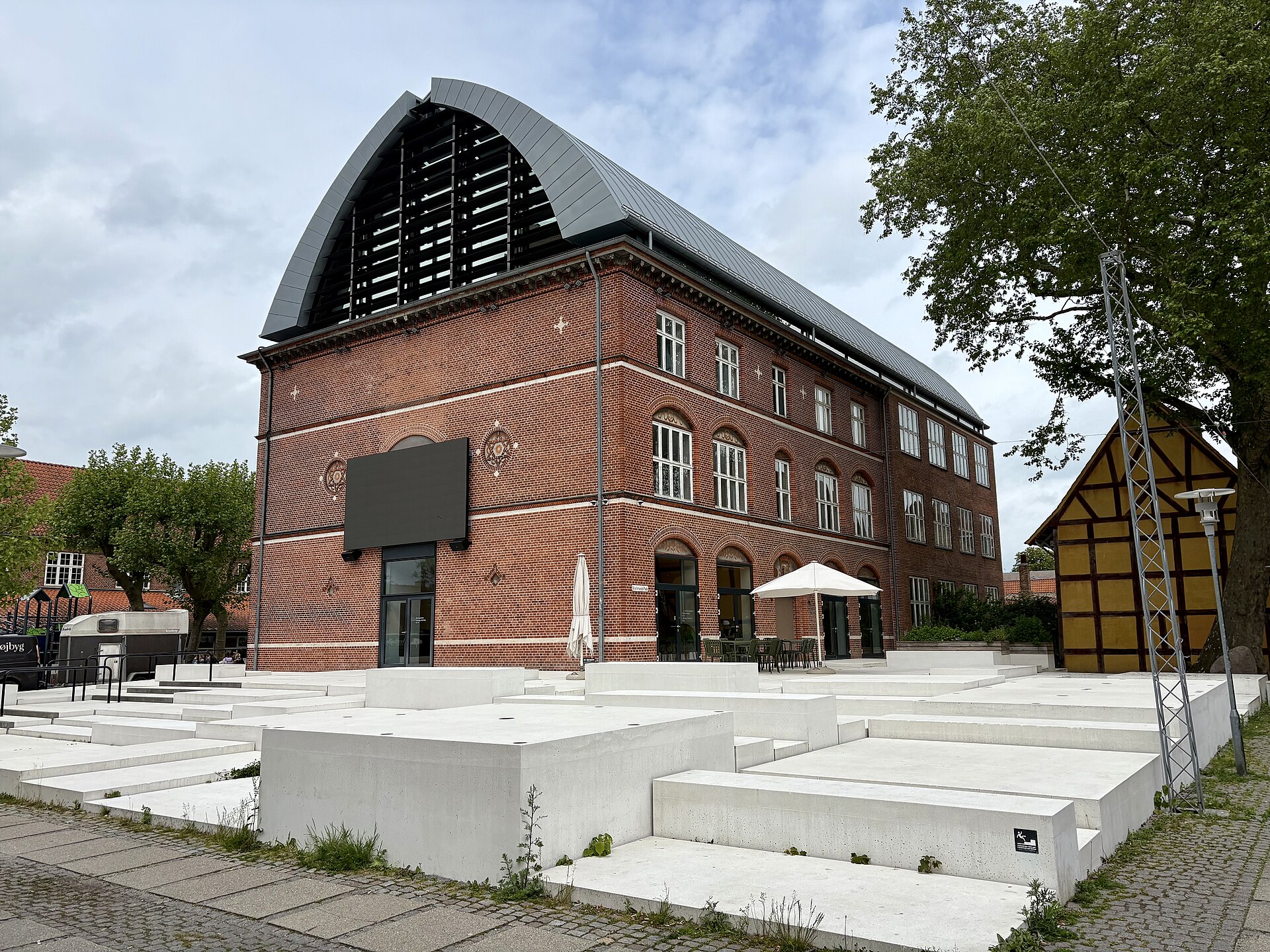
Køge is not defined solely by early heritage; the town seamlessly bridges the past with newer developments. On Nørregade lies KØS Museum of Art in Public Spaces, Denmark’s only cultural institution dedicated specifically to preparatory studies, models, and sketches for public art. The collection illustrates how monumental sculptures and open plazas first took shape on paper before becoming permanent fixtures of the urban landscape.
Heading toward the railway lines leads directly to Stationspladsen. Here, the water installation Vandkunsten serves as a modern bridge between the train tracks and the medieval lanes. As commuter trains roll into the background, water cascades gently over stone, setting a tranquil rhythm against the daily flow of travelers. Looking out across the surrounding rooftops, one can also spot the slender water tower. Erected in the early twentieth century to supply the growing port town with steady water pressure, it has served as a familiar landmark for generations.
Naval Battles and the Harbor Basins
Its waterfront setting has shaped Køge throughout its history. Køge Havn is one of the oldest seaports in the country; sheltered river mouths were already welcoming merchant vessels ashore back in the Viking Age. Today, fishing boats and sailing yachts bob side by side in the water as rigging lines tap rhythmically against metal masts in the breeze. The harbor continues to serve as an active hub for modern cargo handling and pleasure craft alike.
Along the bay’s shoreline, a monument commemorates the historic naval battles fought in these waters. In 1677 and 1710, decisive confrontations erupted in the Bay of Køge between the Danish and Swedish fleets. Renowned commanders such as Admiral Niels Juel and Ivar Hvitfeldt forged their historical legacies here. The memorial honors the hundreds of sailors who perished amid the salty swells during these fierce engagements.
On the outskirts of town, Køge Miniby offers an entirely different perspective on local maritime and urban heritage. From eye level, visitors look across a historic town crafted in miniature. Dedicated volunteers have meticulously recreated the streetscape of 1865 using tens of thousands of handcrafted miniature bricks, showing exactly how harbor quays, narrow alleys, and timbered dwellings interwove a century and a half ago.
This selection represents just a fraction of what awaits discovery along the cobbled streets and quays of Køge. Throughout the complete journey, you will encounter additional historic landmarks, hidden vistas, and engaging riddles that bring the town’s story into vivid focus. Travelers wishing to experience the full walking tour at their own pace will find the complete route along with interactive highlights in the CityWalkGems app.
- 9 stops
- Køge Torv start
- ~3,5 km route length
- ~933 m longest stretch
- about 1–2 h duration
- Free

