
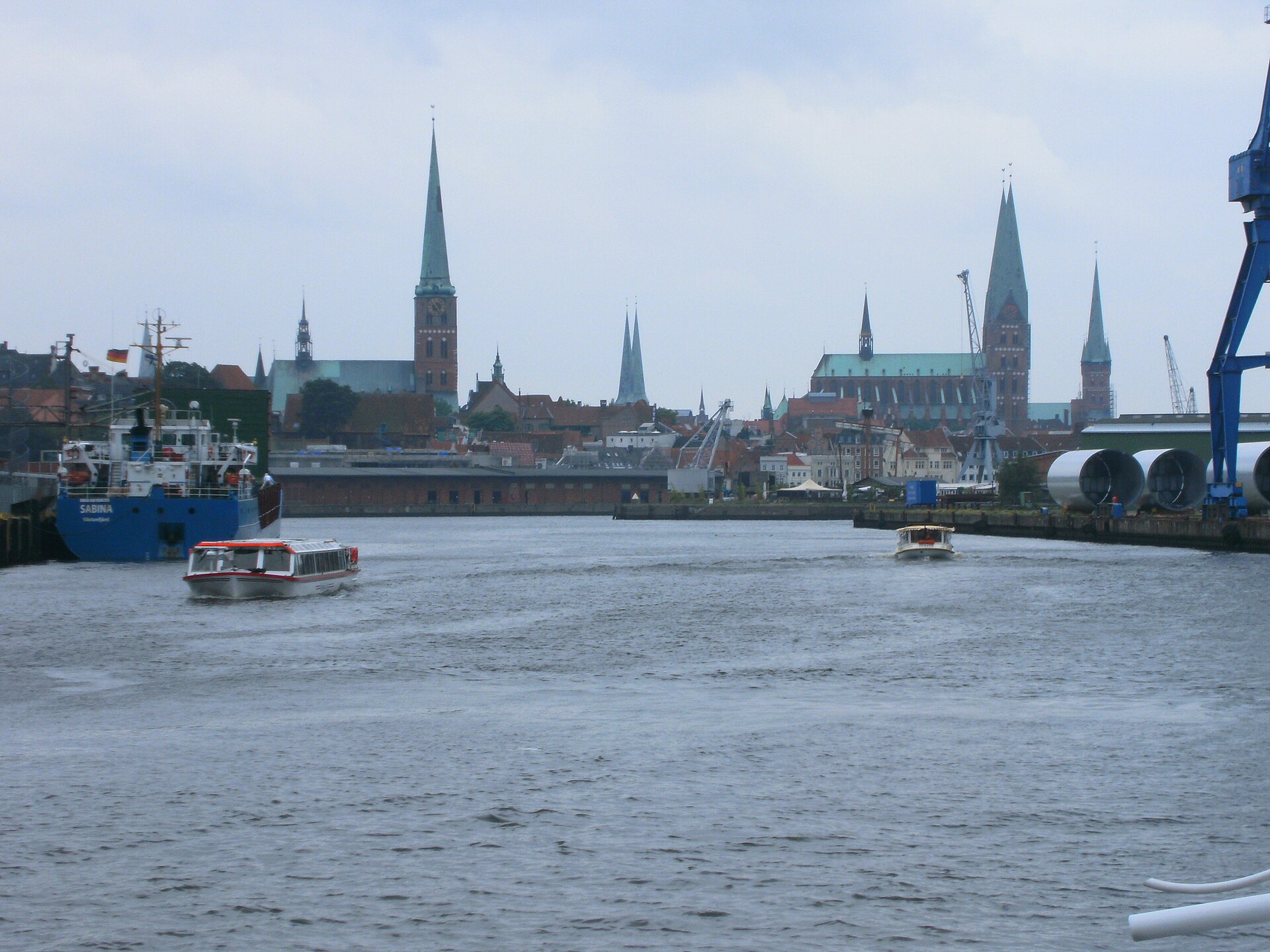
Lübeck, the 'Queen of the Hanseatic League', is a city that embraces its rich past without losing sight of the future. A stroll through this North German gem is a journey through centuries of trade, culture, and social welfare. From the iconic gates whispering tales of prosperity to the serene courtyards where time seems to stand still, Lübeck offers a unique blend of grandeur and intimate charm. It's a place where every cobblestone tells a story and where the echoes of the Hanseatic past are still palpable.

The Gates to the Hanseatic Past
Your introduction to Lübeck inevitably begins at the Holstentor, the proud symbol of the city and a monument to its Hanseatic past. This iconic gate, with its two unequal towers, has withstood the test of time and stands as a silent guardian on the edge of the old city. From the bustling Holstentorplatz (Holstentor Square), you can admire the gate's grandeur, surrounded by the gently flowing waters of the Trave and vibrant city life. It's a crossroads where history and present converge.
Near the Holstentor stand the impressive Salzspeicher (Salt Warehouses), testaments to Lübeck's golden age. Here, 'white gold' – salt from Lüneburg – was stored before being shipped across the Baltic Sea, bringing immense wealth to the city. These warehouses tell the story of flourishing trade and the prosperity that ensued.
On the northern side of the old city, you'll find the majestic Burgtor (Castle Gate), Lübeck's other remaining city gate. With its characteristic round towers, this gate is an imposing entrance to the historic core. It's a place that tells stories of defense and the prosperity that needed protection, through which knights and merchants passed for centuries. The Burgtor guards Lübeck's history and invites you to wander further through its old streets.
Play Lübeck right in your browser →
Heartbeat of the City: Market and People
The beating heart of Lübeck can be found at the Marktplatz (Market Square). For centuries, this has been the central place where trade flourished, important decisions were made, and daily life unfolded. Surrounded by beautiful guild houses and the imposing town hall, you can feel history beneath your feet. Each building on this vibrant stage of past and present tells its own story.
Not far from the market lies the Willy Brandt Haus, a museum that keeps alive the spirit of one of Germany's greatest statesmen. This house is a tribute to Willy Brandt, who grew up in Lübeck and later became Chancellor, known for his 'Ostpolitik'. It's a place that shows how one person can change the world and symbolizes democracy and peace.
Another special insight into Lübeck's human care is offered by the Heilige Geest Gasthuis (Hospital of the Holy Spirit). This medieval hospital, founded in the 13th century, is one of Europe's oldest and best-preserved social institutions. It served as a refuge for the poor and sick. The impressive hall with its wooden vaults and small 'cubicula' (sleeping cells) exudes an atmosphere of compassion and history, a timeless testament to how people cared for each other centuries ago.
Amidst the city's hustle and bustle, you'll find the serene oasis of the Füchtingshof. This is one of Lübeck's many hidden 'Höfe' (courtyards) and 'Gänge' (passages), courtyards founded by wealthy merchants to provide shelter for poorer citizens. These architectural gems offer a moment of peace and reflection, where time seems to stand still amidst beautiful facades. A little further on, at the Obertravebrücke (Obertrave Bridge), you can let your gaze drift over the water. Here, the Trave gently flows beneath you, and Lübeck's historic facades reflect in the water, a place for a moment of contemplation.
Art, Culture, and Contemplation
Lübeck also cherishes a rich cultural heritage. The Behnhaus Drägerhaus is a museum that takes you into the elegant world of the 18th and 19th centuries. This beautiful double house, once inhabited by affluent merchant families, now houses an impressive collection of art from Romanticism to Modernism. The magnificent stucco ceilings reflect the wealth and taste of the original inhabitants and make you feel like you're stepping through a time machine.
Another cultural treasure trove is the Museumsquartier St. Annen (St. Annen Museum Quarter), where art and history converge in a former monastery. The serene atmosphere of the monastery complex, with its brick architecture, forms a unique backdrop for collections of medieval altarpieces and modern art. The cloister invites peace and contemplation, a place where old and new meet.
Finally, the imposing Lübeck Cathedral towers over the city like a fortress. This brick cathedral was painted by monks for centuries, making the vault display a heaven full of stars and saints. The result is Europe's largest painted interior, a majestic place full of stories and art that you won't soon forget.
This walk through Lübeck offers a fascinating glimpse into the city's Hanseatic history, cultural richness, and social commitment. The mentioned places are just a selection of the many discoveries awaiting you. The full walk through Lübeck, with all its stops, riddles, and hidden details, awaits you in the 'CityWalkGems' app. Let yourself be guided and discover the secrets of this special city.
- 12 stops
- Start anywhere
- ~3,9 km route length
- ~900 m longest stretch
- about 1,5–2 h duration
- Free

