
Also known as: Rímini
Rimini, often associated with sun-drenched beaches on the Adriatic coast, reveals a surprisingly rich and layered story to the curious traveler. Far beyond the seaside resorts lies a city deeply rooted in history, where Roman emperors left their mark and powerful families shaped art and architecture. It's a place where every cobblestone carries an echo of the past, from the grandeur of ancient Rome to the resilience of modern times. Let's explore Rimini's historical core together, a walk that takes you through two thousand years of captivating history.
Rimini's Roman Roots
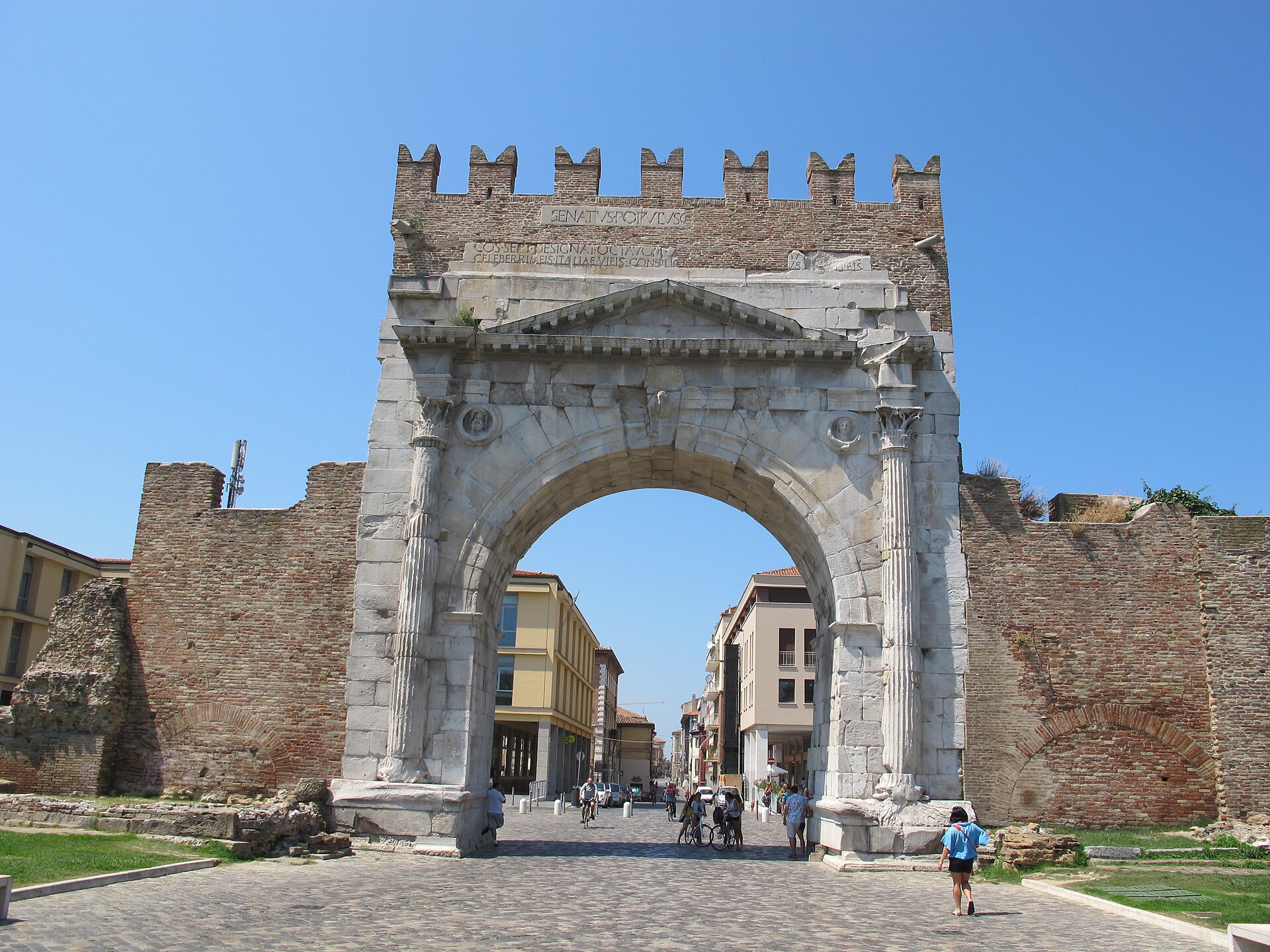
The journey through Rimini's past often begins at the impressive Arco di Augusto. This triumphal arch, the oldest still standing in all of Italy, has stood for over two thousand years as a majestic gateway marking the entrance to Rimini. Once crowned with a bronze statue of Emperor Augustus, the arch testifies to the Roman presence and Rimini's significance as a gateway. From here, it's a short walk to the heart of the city, where the history of the Roman Empire remains tangible.
A stone's throw away, in what is now called Piazza Tre Martiri, stands the Statua di Giulio Cesare. This is the spot where Julius Caesar, in 49 BC, is said to have uttered his famous words "Alea iacta est" after crossing the Rubicon, a moment that sparked a civil war and forever changed the Roman Republic. His stone gaze captures the determination of that crucial decision.
One of the city's most extraordinary archaeological finds is the Domus del Chirurgo, the 'House of the Surgeon'. This Roman house, perfectly preserved after a fire in the 3rd century, offers a unique insight into daily life and medical practices of antiquity. Inside, beautiful mosaics and a complete set of surgical instruments can be admired, a fascinating glimpse into a distant past.
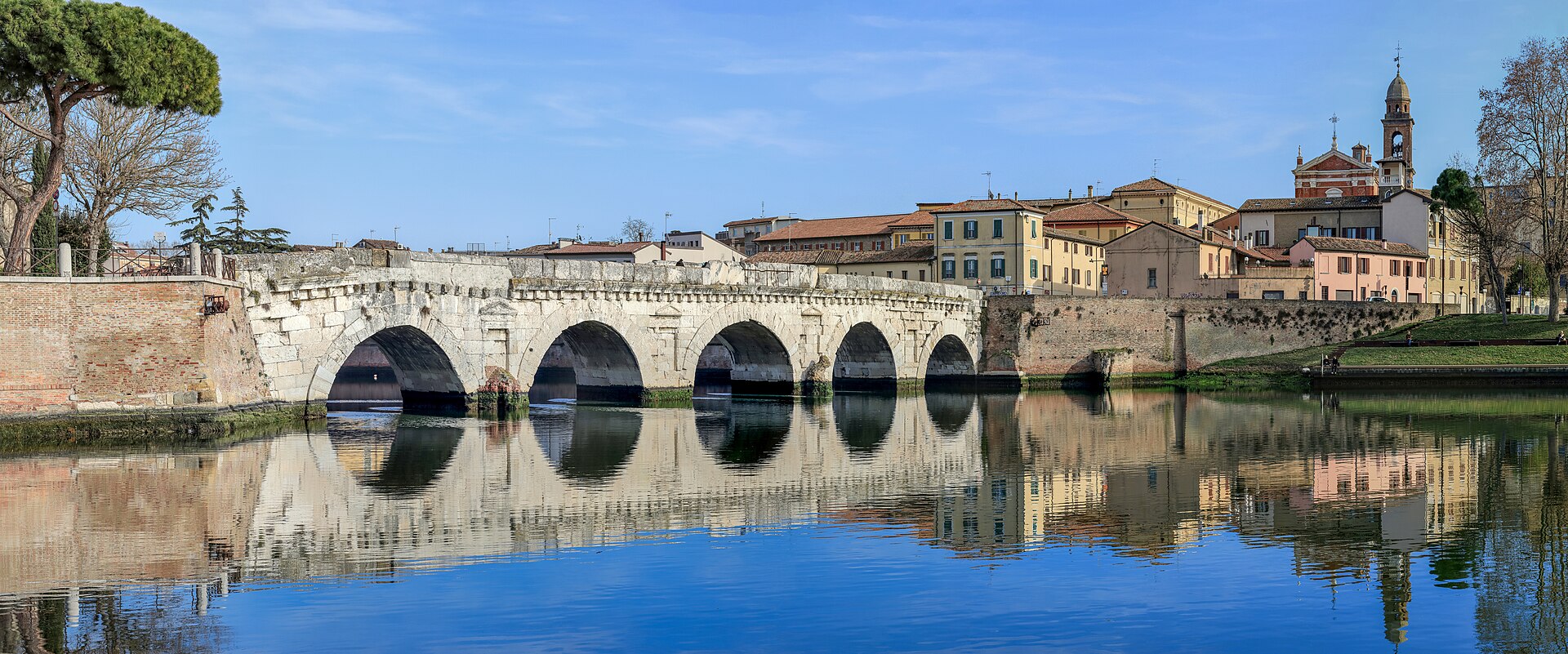
The Roman influence extends to the Marecchia river. From the green Parco XXV Aprile, you have a view of the majestic Ponte di Tiberio, a Roman masterpiece that has stood for two thousand years. This bridge, like the Arco di Augusto, is a testament to the durability of Roman engineering. Those who wish to delve deeper into this period will find a treasure trove of Roman artifacts in the Museo della Città "Luigi Tonini", including the spectacular finds from the Domus del Chirurgo. The museum takes you on a journey from prehistory to modern times, with a focus on its rich Roman collection.
The Splendor of the Malatestas
After the Roman era, Rimini experienced a new flourishing period under the rule of the Malatesta family. Their influence is still prominent in the cityscape. The Tempio Malatestiano is a masterpiece of the early Renaissance. Originally a Gothic church, it was transformed by Sigismondo Pandolfo Malatesta into a temple in honor of himself and his beloved Isotta. Inside, incredible details can be found, such as the famous 'Malatesta elephants' symbolizing the family's power.
Near the temple stands the imposing structure: Castel Sismondo. This was the impregnable fortress and luxurious residence of Sigismondo Pandolfo Malatesta. With its massive walls and strategic towers, the castle still exudes the power and ambition of this legendary lord of Rimini. It is a tangible symbol of a turbulent period in Italian history.
The castle is now connected to the heart of the city via the renovated Piazza Malatesta. This expansive square, with its elegant water features and careful paving, is a beautiful example of how history and modern design converge. It is designed as a vibrant meeting place that connects the grandeur of the castle with contemporary city life.
Echoes of Freedom and Contemporary Stories
Rimini's history is not only one of emperors and lords but also of courage and resilience in more recent times. In Piazza Tre Martiri, where the Caesar statue stands, a small but powerful memorial plaque, the Lapide a Bonvillo, commemorates the bravery of Bonvillo and his comrades. This square witnessed the cruel execution of three young partisans in 1944, an act that deeply shocked the city. The nearby monument, Gloria ai Caduti per la Libertà, is an impressive tribute to those who gave their lives for Rimini's freedom during World War II. The powerful sculptures and solemn atmosphere invite reflection on the sacrifices made.
A very different, yet equally vibrant story, is told in the Borgo San Giuliano. This district, which feels like an open-air museum, is famous for its lively murals. They celebrate the life of the renowned filmmaker Federico Fellini and Rimini's rich history. Every wall is a canvas full of color and fantasy, and the narrow streets invite wandering and discovery. It's a place where the artistic soul of the city comes to life.
The Porta Galliana, one of the few remaining medieval city gates, recalls an era of robust defensive walls and sieges, a silent witness to Rimini's resilience throughout the centuries.
This walk through Rimini's historical heart is just a glimpse into the many stories the city has to offer. From the grandeur of the Roman Empire to today's artistic expressions, Rimini surprises with its depth and diversity. There are many more hidden details, captivating anecdotes, and unexpected discoveries to be made. Do you want to experience the full route and truly get to know the city? Then choose the Rimini walk in the CityWalkGems app and let yourself be guided through the ages.
- 13 stops
- Start anywhere
- ~4,1 km route length
- ~728 m longest stretch
- about 1,5–2,5 h duration
- Free

