
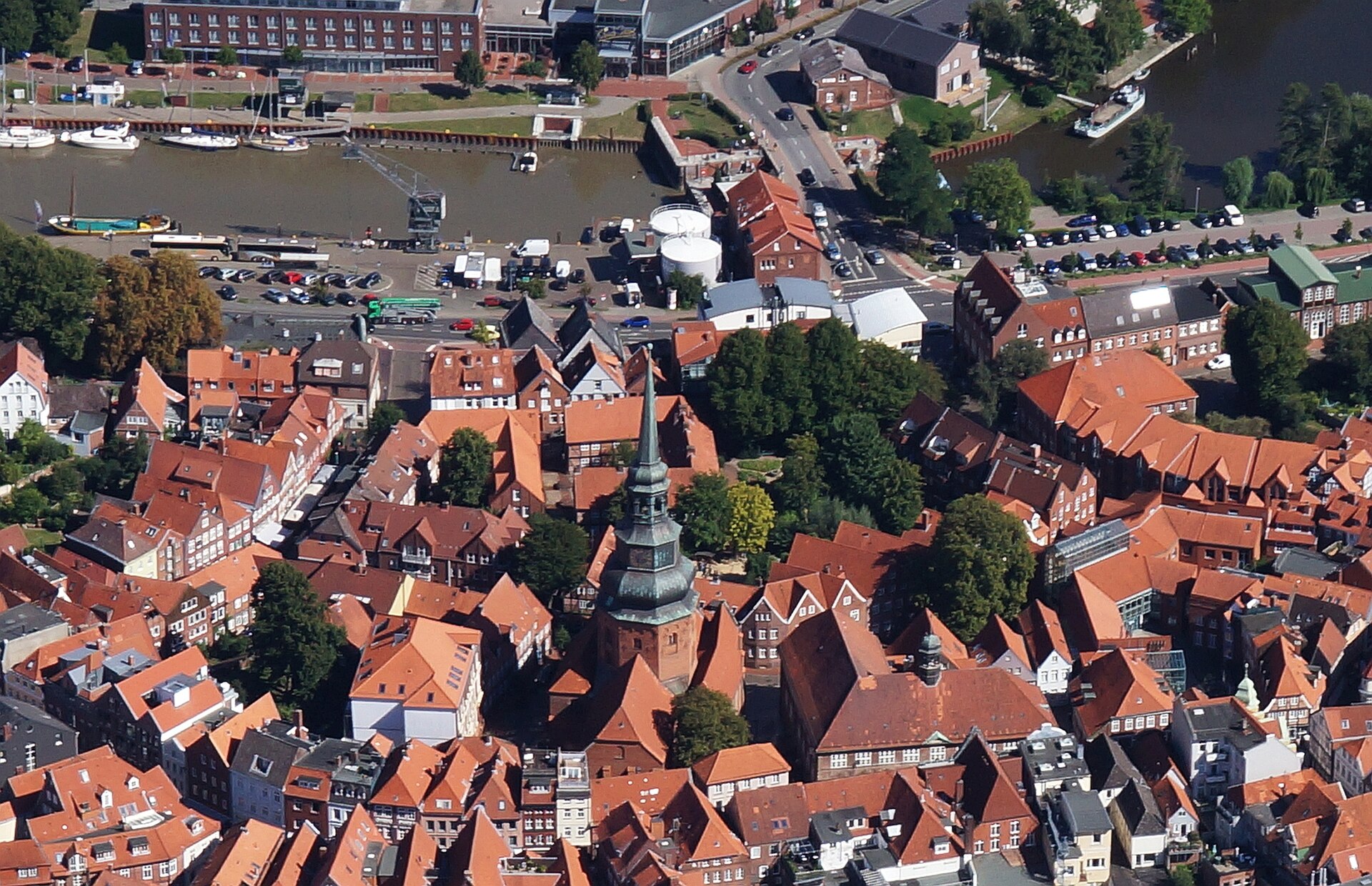
Nestled along the tidal river Schwinge, not far from the Elbe, lies the historic trading town of Stade. While many travelers in northern Germany head straight for larger port cities, this former Hanseatic town boasts a remarkably well-preserved historic layout. A walking tour of Stade takes you along scenic waterways, atop seventeenth-century earthen ramparts, and past brick facades that bear witness to an eventful past.
Trade and Innovation Around the Old Port
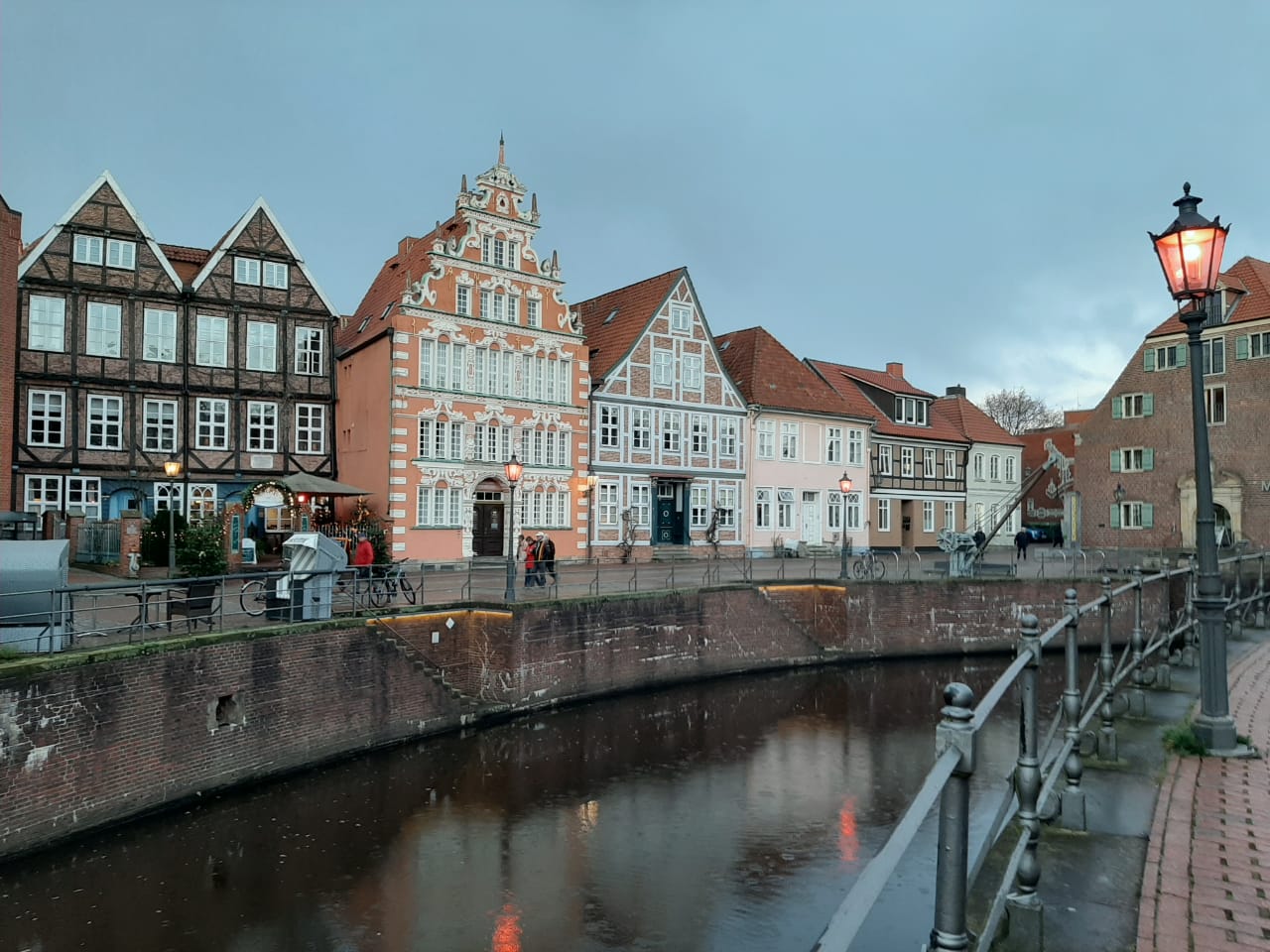
At the heart of the historic center lies the basin of the Altstadt harbor. For centuries, heavily laden cogs docked here, carrying herring, salt, and linen from every corner of Europe. Today, colorful patrician houses and wooden quays are mirrored in the calm waters of the basin. A striking historic feature along the waterfront is the wooden treadwheel crane, once used to hoist cargo onto the quay by human power alone.
Down at the harbor, practical craftsmanship drove the town's prosperity for centuries. On Kalkmühlenstraße, the street name recalls the mill that once stood directly on the water, grinding limestone into mortar for urban construction. Today, this corner marks the transition from the old ramparts to the modern town, where specialty shops like Byblos Markt fill the air with the aromas of freshly baked flatbread and olives.
Close to the water stands another architectural landmark: the Traufenhaus (eaves-fronted house). While medieval houses typically featured gables facing the street, this style features a long eave running parallel to the roadway. City authorities made this design mandatory following devastating fires; the combination of wider structures and brick firewalls helped prevent widespread destruction, marking the shift from medieval architecture to early modern town planning.
Play Stade right in your browser →
From Swedish Fortifications to Public City Greens
Alongside commerce, defense played a defining role in Stade's development. During the Swedish occupation in the seventeenth century, the settlement was expanded into a heavily fortified stronghold. The Güldenstern Bastion is one of the most tangible surviving relics of this military era. Rising high above the moat, this advanced earthen rampart was designed to fend off approaching armies. Today, it serves as a peaceful walking path along grassy banks, offering sweeping views over the Schwinge and the rooftops of the town center.
A little further along the ring of moats lies the Stader Bürgerpark, set on the former Adolf Ravelin. Where musketeers once kept watch on a strategic triangular defensive island surrounded by water, visitors now stroll among century-old beeches and quiet ponds to the sound of blackbird song.
The watery landscape around the moats also hosts Stade's open-air museum, located on a verdant island in the Schwinge. Since 1914, this museum has showcased how craftsmen and farmers persevered for centuries across the Elbe-Weser region. Among the willows stand authentic thatched half-timbered farmhouses, crowned by a historic post windmill rising proudly above the treetops.
Cobblestones and Chimes in the Town Center
Further inland, Stade's market heritage comes alive. At the western gateway to the town lies the Pferdemarkt (Horse Market). For centuries, this cobblestone square was where merchants and riders gathered to trade horses and livestock. Today, the expansive square serves as a lively central meeting point, filled with outdoor cafés and seasonal markets beneath a leafy canopy.
From the Pferdemarkt, the bustling Hökerstraße shopping street leads straight to the historic town hall. At regular intervals, the resonant notes of the carillon drift over historic facades and bustling outdoor terraces. It is the perfect place to pause with a locally brewed drink and take in the enterprising merchant spirit that shaped Stade.
This article highlights just a handful of the memorable sights that define Stade. The complete walking tour guides you past many more historic viewpoints, hidden gable stones, and captivating stories from the past. Open the CityWalkGems app to explore Stade on your own self-guided journey.
- 9 stops
- Start anywhere
- ~3,7 km route length
- ~914 m longest stretch
- about 1,5–2 h duration
- Free

