
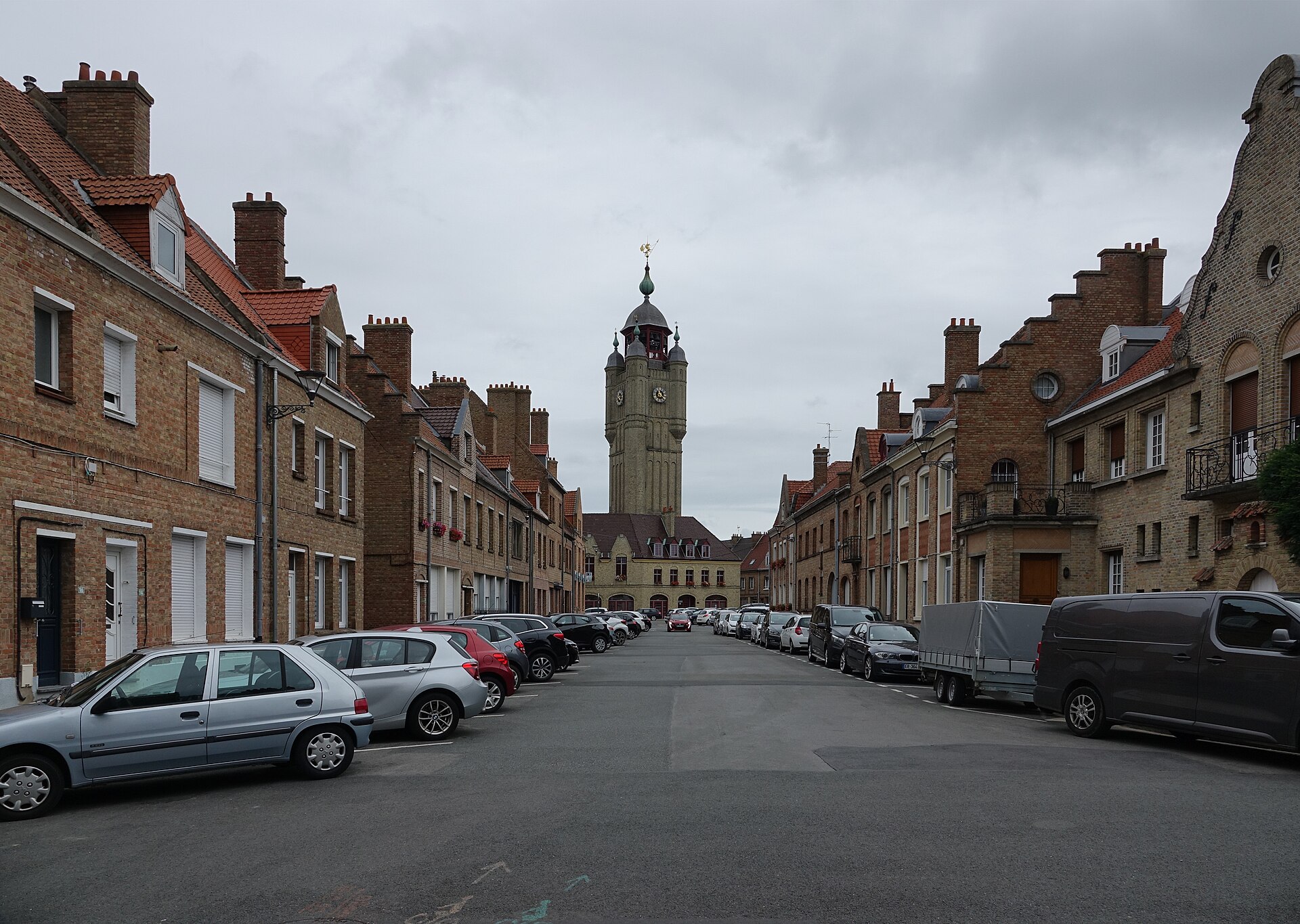
Just across the Franco-Belgian border lies Bergues, a town easily spotted from afar thanks to its distinctive silhouette. Taking a walking tour of Bergues means stepping into a compact historic centre where centuries of military and civic heritage remain tangible. Encircled by kilometres of earthen ramparts and gently rippling canals, the town offers a captivating glimpse into how strategic strongholds in French Flanders functioned and stood their ground through the ages.
The Heart of the Town: Bells and Movie Sets
The natural starting point in Bergues is the central market square, paved with traditional cobblestones. As soon as the carillon comes to life, the chime of bells fills the surrounding streets beneath the belfry. This tower boasts a turbulent history: devastated during the Second World War, it was meticulously rebuilt stone by stone according to its original sixteenth-century design. Today, it once again stands proudly as the civic heart of the community.
Not far from the belfry, a familiar façade catches the eye of many visitors. On the square, a municipal building served as a primary filming location for Dany Boon's box-office hit Bienvenue chez les Ch'tis. During filming, the building featured as the quirky local post office, propelling the town to international fame.
A short stroll away, Saint Martin's Church reveals another chapter of Bergues' reconstruction. After repeated destruction by fires and war, its nave was rebuilt in a striking blend of Gothic design and twentieth-century post-war architecture. The softened daylight pouring through the soaring windows accentuates the generous proportions of this resurrected church.
Traces of Monks and Medieval Waterways
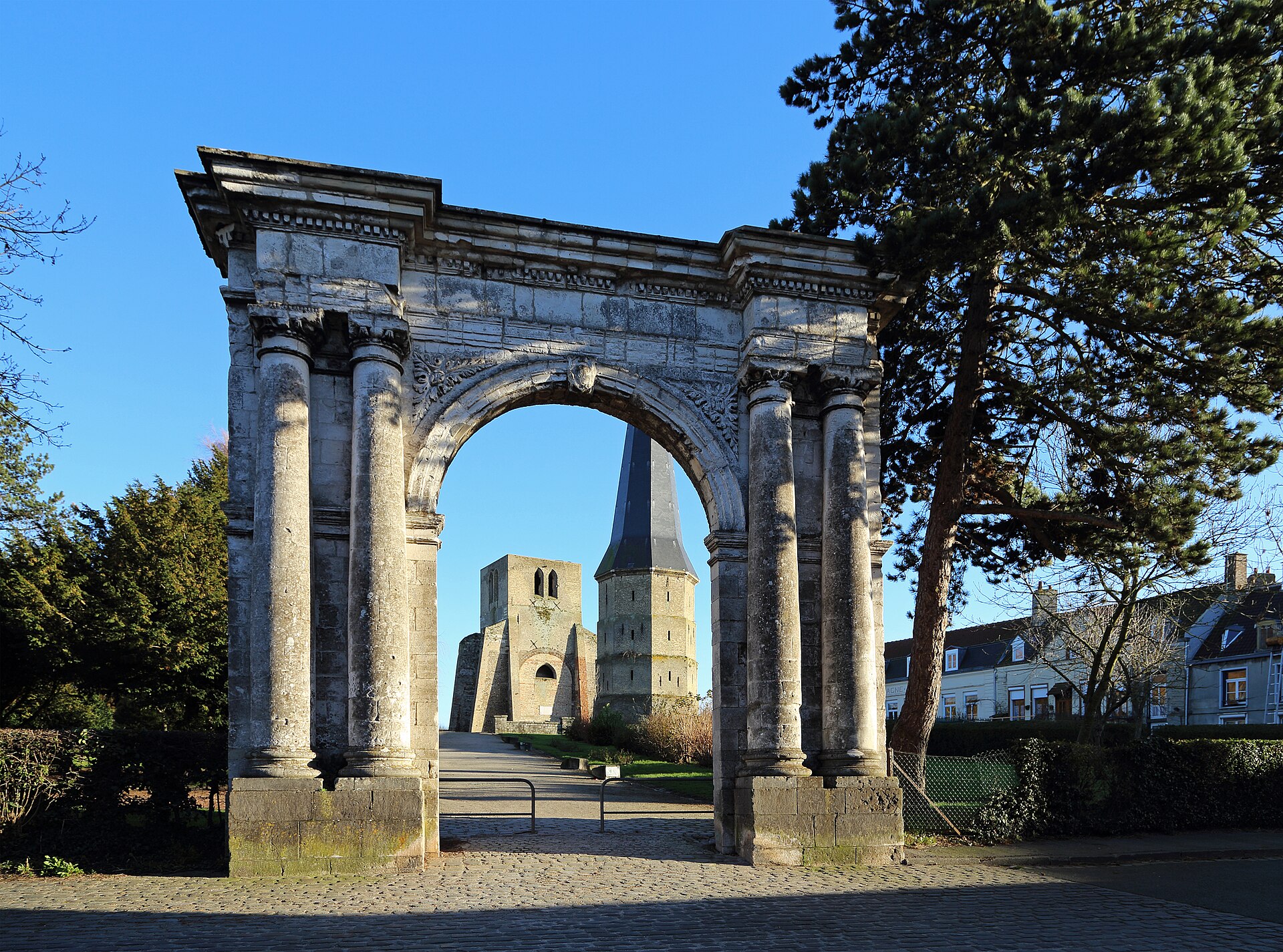
To the east of the town centre, lush lawns unfurl around the remains of the ancient Abbey of Saint-Winoc. During the French Revolution, most of the monastic complex fell victim to the wrecking ball. Only two solitary towers survived: a sturdy square tower and a slender, pointed spire. Rising like dramatic landmarks against the greenery, they stand as reminders of the immense religious significance Bergues once held throughout the region.
Water has always played a vital role in both daily life and town defence. At the Marble Gate (Marmerpoort), gentle waters carry drifting leaves beneath a sturdy stone archway. In days gone by, heavy wooden portcullises barred enemy boats attempting to slip into town along the canal unnoticed. A little further along the quay sits the former slaughterhouse (Ancien Abattoir). Its low facade mirrors across the water—a poignant nod to an era when waterways were the primary transport arteries for goods entering and leaving the town.
Even older defensive vestiges can be explored at the Medieval Tower (Tour Moyenâgeuse). Constructed from weathered sandstone and robust masonry, this relic dates back to the era before modern military engineers favoured earthen ramparts. Back then, townsfolk relied on tall stone watchtowers to spot approaching enemy troops across the flat Flemish plains well in advance.
Five Kilometres of Ramparts: From Spanish Rule to Vauban
No trip to Bergues is complete without exploring its military architecture. The town boasts one of the best-preserved fortification networks in Northern France. Over five kilometres of grass-clad ramparts, bastions, and earthen dikes continue to encircle the historic core entirely.
Along the ramparts, you encounter various gates and bastions illustrating shifts in military engineering across different eras. The Porte aux Boules, adorned with heavy stone spheres atop the portal, dates back to when Spanish and French rulers alike sealed off the town against invaders. A little further along, the Tour des Couleuvriniers bows out with a stout, semicircular wall over the dark moat. Here, gunners armed with culverins—early firearms—were positioned to sweep the flanks of the wall whenever attackers approached.
The crowning glory of the fortifications is the Cassel Gate (Porte de Cassel) on the southern side. Overhauled by the celebrated military architect Sébastien Le Prestre de Vauban, this gateway was adorned with stately sandstone pilasters and the royal Sun King emblem of Louis XIV. Serving as the grand terminus of the defensive line facing Cassel, this gate epitomises the sheer grandeur with which the French crown fortified its northern frontier.
Exploring Further in Bergues
The highlights shared here are merely a sample of what awaits inside and along the historic town walls. A full walking tour through Bergues uncovers countless architectural details, historical enigmas, and serene waterside spots. If you want to experience the complete route with all the rich background stories and interactive navigation, select the Bergues tour in the handy CityWalkGems app.
- 11 stops
- Start anywhere
- ~3,6 km route length
- ~892 m longest stretch
- about 1,5–2 h duration
- Free

.jpg)