
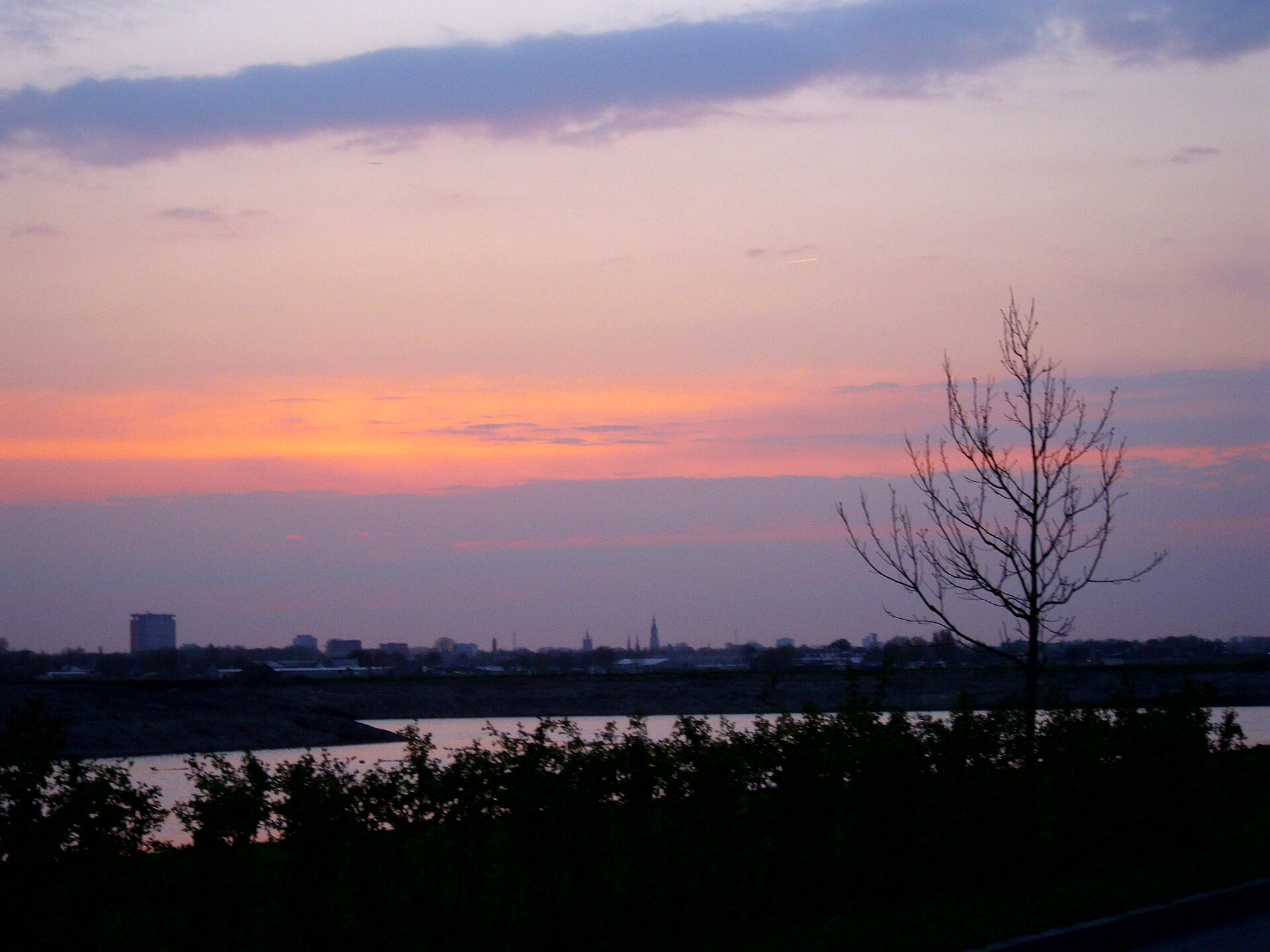
Delft doesn't ask to be rushed. Behind the facades along its canals, the Golden Age is still there: the Dutch monarchy began here, and so did the studio of one of Holland's most famous painters. None of it sits behind museum glass. It's still out on the street, among the bikes and the terraces.
The cradle of Orange and the old city walls
Start at Molen de Roos, the last of the eighteen windmills that once stood on Delft's city walls. It still grinds grain by wind, and inside you can hear the wood creak and smell the flour.
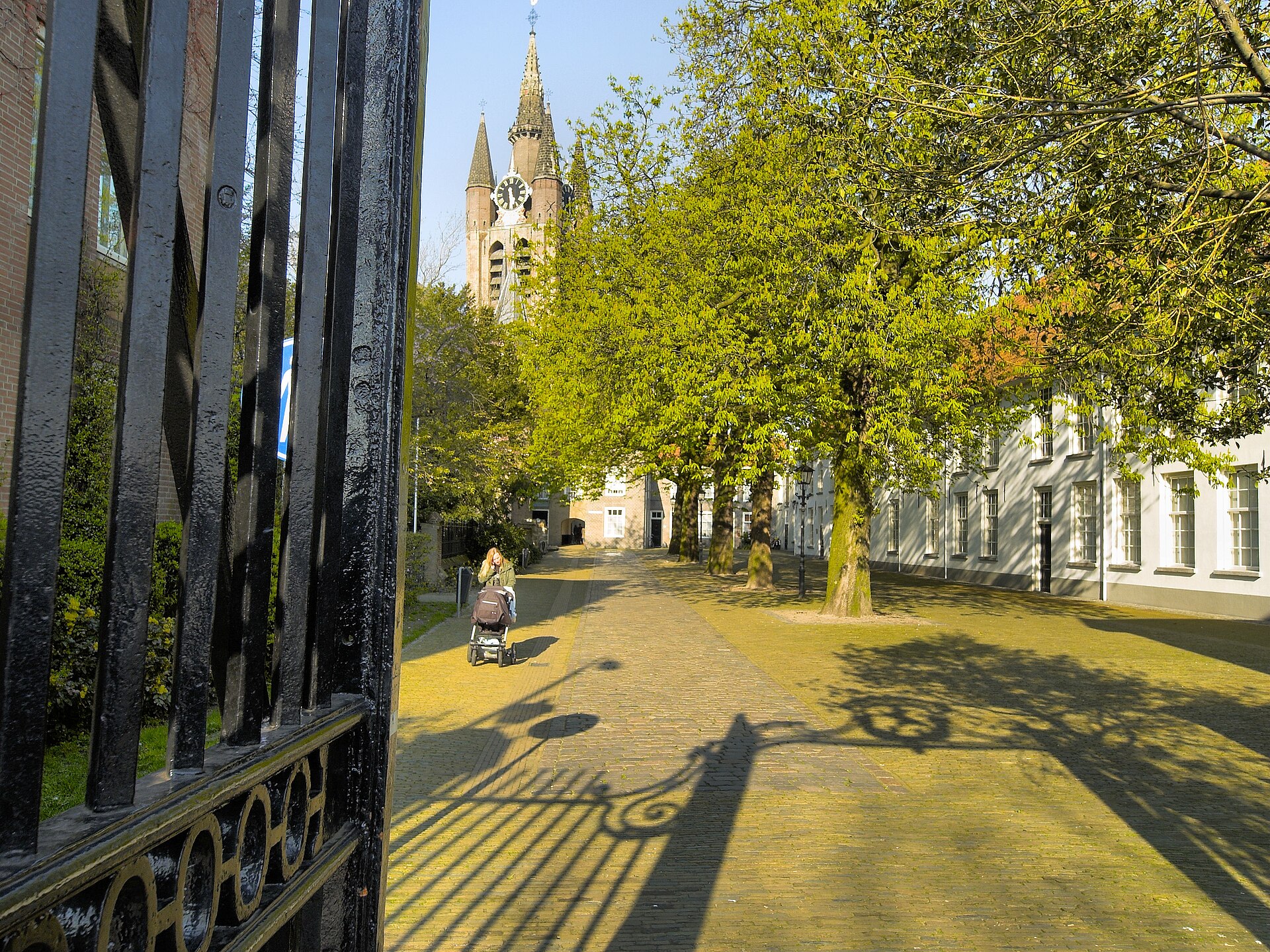
A few steps on is the Prinsenhof, a former monastery that became the court of William of Orange. Here, in 1584, he was fatally shot by Balthasar Gerards; the bullet holes are still in the wall of the staircase. Nearby stands the Oude Kerk, known locally as 'Scheve Jan' (Leaning John). When the Gothic tower went up in the 13th century, its foundation on a filled-in canal began subsiding almost at once, and today the tower leans nearly 2 meters out of plumb. Inside are the graves of the painter Johannes Vermeer and the naval hero Piet Hein.
The Nieuwe Kerk started as a small wooden church in 1351 and now holds the tomb of William of Orange, the Father of the Fatherland. Its tower is 108 meters tall, the second-highest church tower in the Netherlands, and a climb of 376 steps gets you a view that reaches Rotterdam and The Hague on a clear day.
In the footsteps of Vermeer and Delft Blue
The Vermeer Centre stands on the site of the old Guild of Saint Luke, where painters including Vermeer were once registered as masters. The originals hang elsewhere, but here you can see how he built his effects of light and perspective.
The Koornmarkt is often called Delft's prettiest canal. In the Golden Age it was an economic hub lined with patrician houses and breweries that drew on the canal water, and the facades along it are richly decorated, some visibly subsided over the centuries.
Royal Delft, also known as De Porceleyne Fles, has operated since 1653 and is the last surviving original 17th-century Delftware factory. The pottery is still hand-painted there today.
From busy squares to quiet courtyards
The Markt, one of Europe's largest historic squares, is flanked by the Stadhuis and the Nieuwe Kerk. Vermeer was born at its edge, and it remains a good spot to sit with a coffee and watch the square go about its business.
Nearby is the Beestenmarkt, shaded now by 24 plane trees. Until 1972 this was a weekly cattle market, full of mooing and haggling; today it's lined with terraces instead.
Just off the main shopping streets is the Bagijnhof, a medieval court where Beguines, Catholic laywomen who lived piously without taking monastic vows, once lived. Its chapel is tucked behind an ordinary facade. Nearby are the Stille Putten, wells that recall a time when clean water mattered enormously to residents and to the city's brewers.
The walk ends at the Oostpoort, Delft's last surviving city gate, built around 1400, with pointed turrets and a drawbridge that reflects in the water below.
This is only a glimpse of what Delft has to offer. The full walk in the CityWalkGems app covers more stops, with stories and details you'd otherwise miss.
- 13 stops
- Molen de Roos start
- ~4,7 km route length
- ~942 m longest stretch
- about 2–2,5 h duration
- Paid

.jpg)