
Also known as: Leyde, Leida
Leiden feels older than the other Dutch cities, and not just because of its facades. Rembrandt was born here, the country's oldest university stands here, and the Pilgrim Fathers prepared their crossing to America here. All three threads run through the whole city, down to its smallest alleys.
The cradle of knowledge and art
Rembrandt van Rijn was born in 1606 in a modest house on Weddesteeg, on the spot now called Rembrandtplaats. The house itself was demolished in the early 20th century, but a bronze statue of the young painter still stands there, staring at an empty canvas.
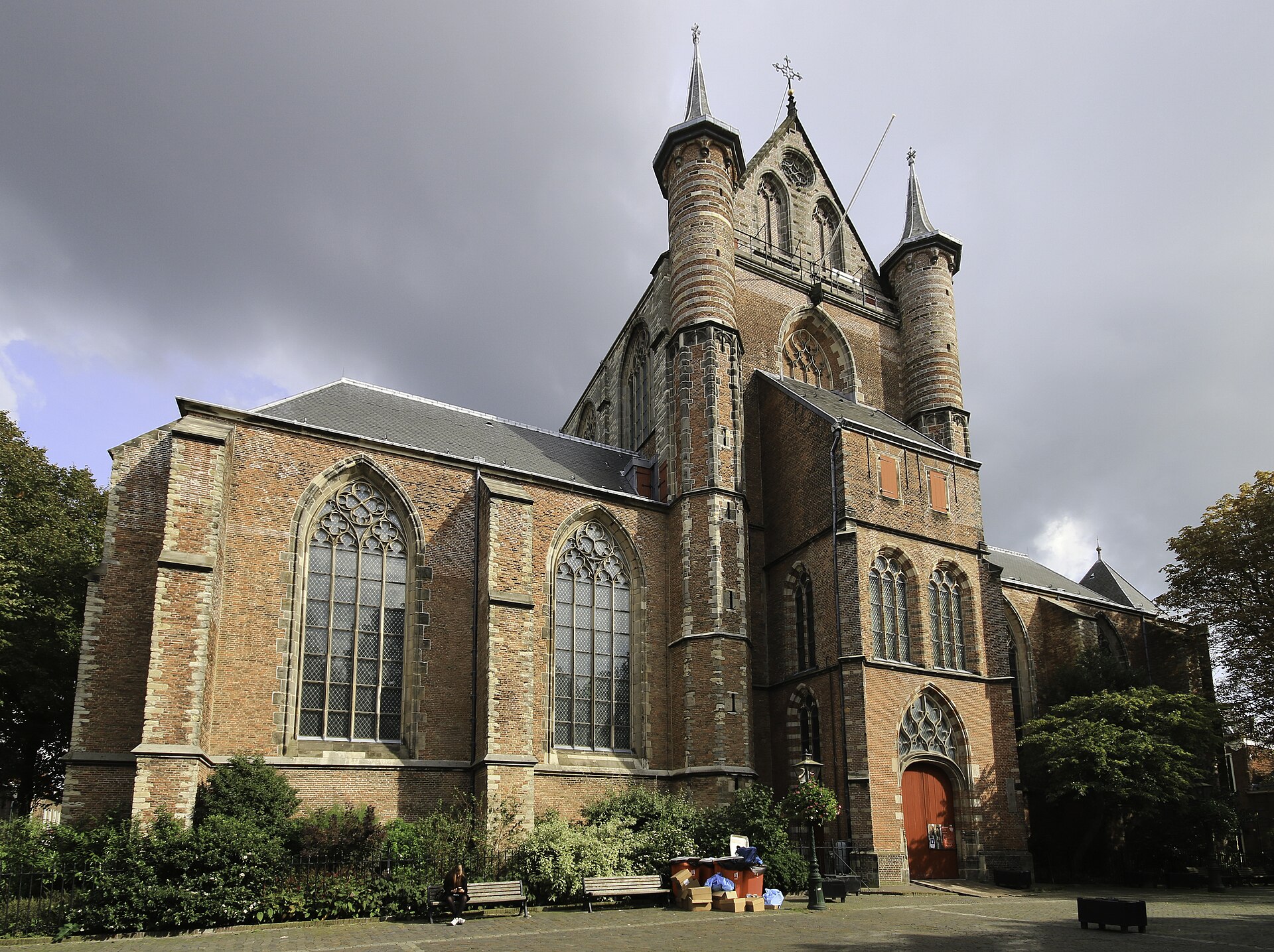
A few hundred meters on is the Pieterskerk, one of Leiden's most important churches for over 900 years. In the 17th century the Pilgrim Fathers, English refugees who later sailed to America on the Mayflower, gathered here. Their leader, John Robinson, is buried inside: a piece of American history in the middle of Holland.
Leiden University, the oldest in the Netherlands, sits at the heart of the city. The Academy Building dates from 1516. Inside is the 'Zweetkamertje' (Sweat Room), where generations of students waited nervously for their graduation results. Those who passed were allowed to write their name on the centuries-old walls, a tradition even the King has taken part in. Close by is the Hortus Botanicus, the oldest botanical garden in the Netherlands: plants and knowledge from around the world have come together here since 1590. Carolus Clusius worked here on what later became the basis of Dutch tulip history.
Behind the Hortus, on the edge of the canal, stands the Oude Sterrewacht, the oldest still-functioning university observatory in the world. Inside, quiet staircases and round domes set the tone, along with the knowledge that generations of researchers have studied the sky from this spot.
Icons along the canals and alleys
Molen De Valk is a tower mill from 1743, the last original of the nineteen windmills that once stood on Leiden's ramparts. Inside you can still see how a miller lived here, and the gallery gives you a view over the canals and rooftops of the city.
The Morspoort was the western entrance to medieval Leiden. Its name comes from 'De Morsch', the marshy ground that used to lie just outside the city walls. The gate's dome served as a prison for years. You get the best view of it from the bridge over the water.
Deeper into the city is 'Het Gerecht', a square ringed with trees. Until the 18th century this was where Leiden's residents were tried and punished. Today a historic water pump stands in the middle, and the cobblestones are the same ones laid centuries ago.
In the middle of the city, the Burcht van Leiden rises unexpectedly between the houses: an artificial hill with a ring wall. The Burcht dates from the 11th century and served as a refuge for Leiden's residents when the surrounding area was still prone to floods and attacks. Its entrance is decorated with heraldic coats of arms, and the walkway on top looks out over the rooftops of Leiden.
The walk ends at the Hooglandse Kerk. The church's huge Gothic walls dominate the streets around it, and small houses are built right up against them; some were once rented out to help pay for the building's upkeep. That contrast between the enormous church and the tiny facades stays with you, even on the way back.
- 10 stops
- Start anywhere
- ~3,2 km route length
- ~646 m longest stretch
- about 1–2 h duration
- Paid

.jpg)