
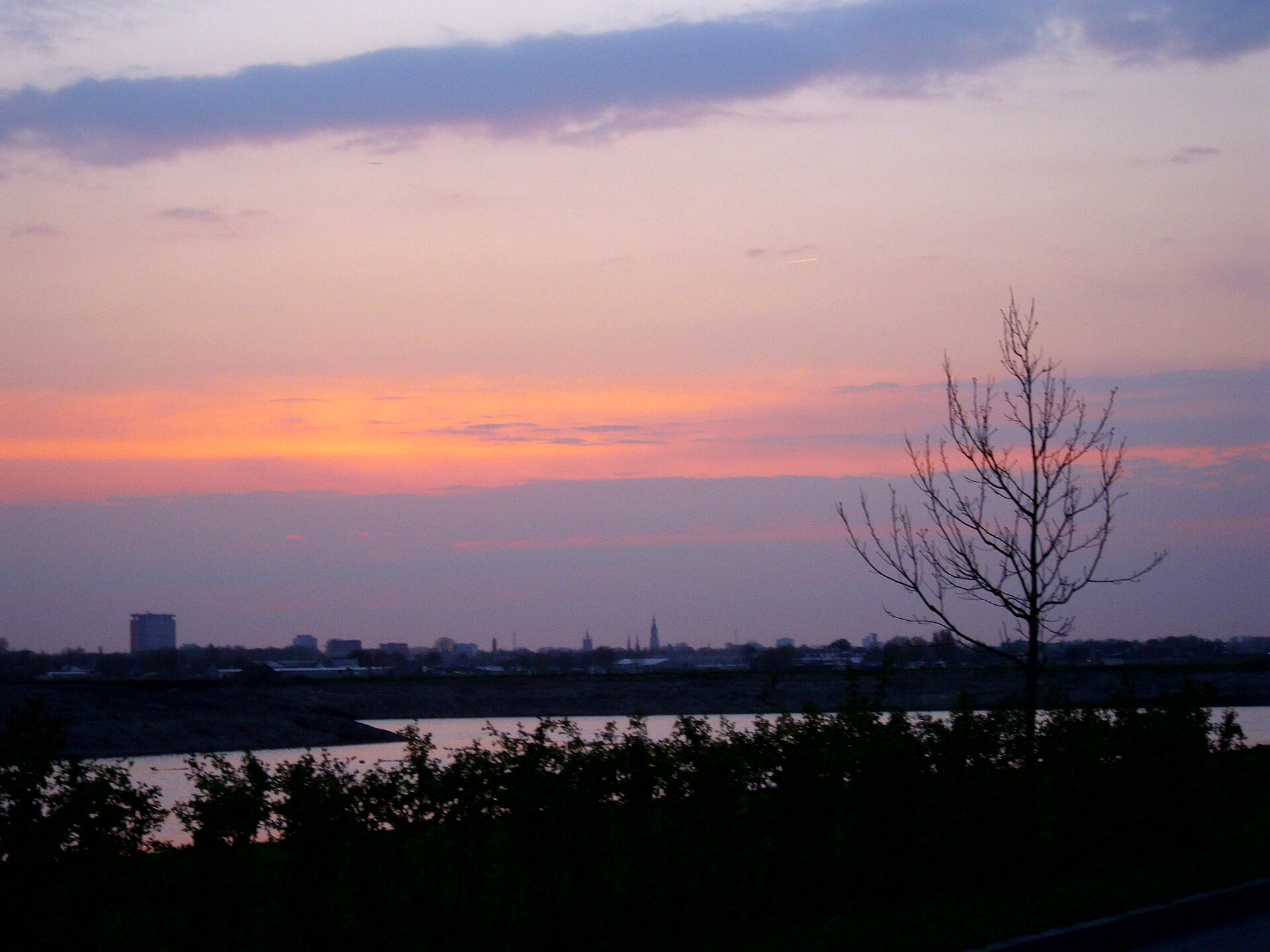
Delft rewards a slow walk more than an entry ticket. Most of what makes this city memorable sits in the open air, on squares and along canals, where looking costs nothing.
Start on the Markt, one of the largest and most handsome historic squares in Europe. You don't need to go inside anything to feel its pull: stately façades line three sides, the New Church rises over the fourth, and the open space itself is the attraction. Johannes Vermeer grew up right here, in his father's inn on this square, and standing in the middle of it costs exactly nothing.
A short walk away, tucked behind the shopping streets, is Bagijnhof — a hidden gem that most visitors walk straight past. This medieval courtyard was home to Beguines for centuries: Catholic women who led religious lives without taking formal monastic vows. Step through the gate and the city noise drops away almost instantly. Look for the schuilkerk, a church deliberately hidden behind an ordinary-looking façade from the days when Delft had turned Protestant and Catholic worship had to stay out of sight. There's no fee to walk the courtyard, and it's one of the few spots in Delft where you can stand in near-total quiet a few minutes from the main square.
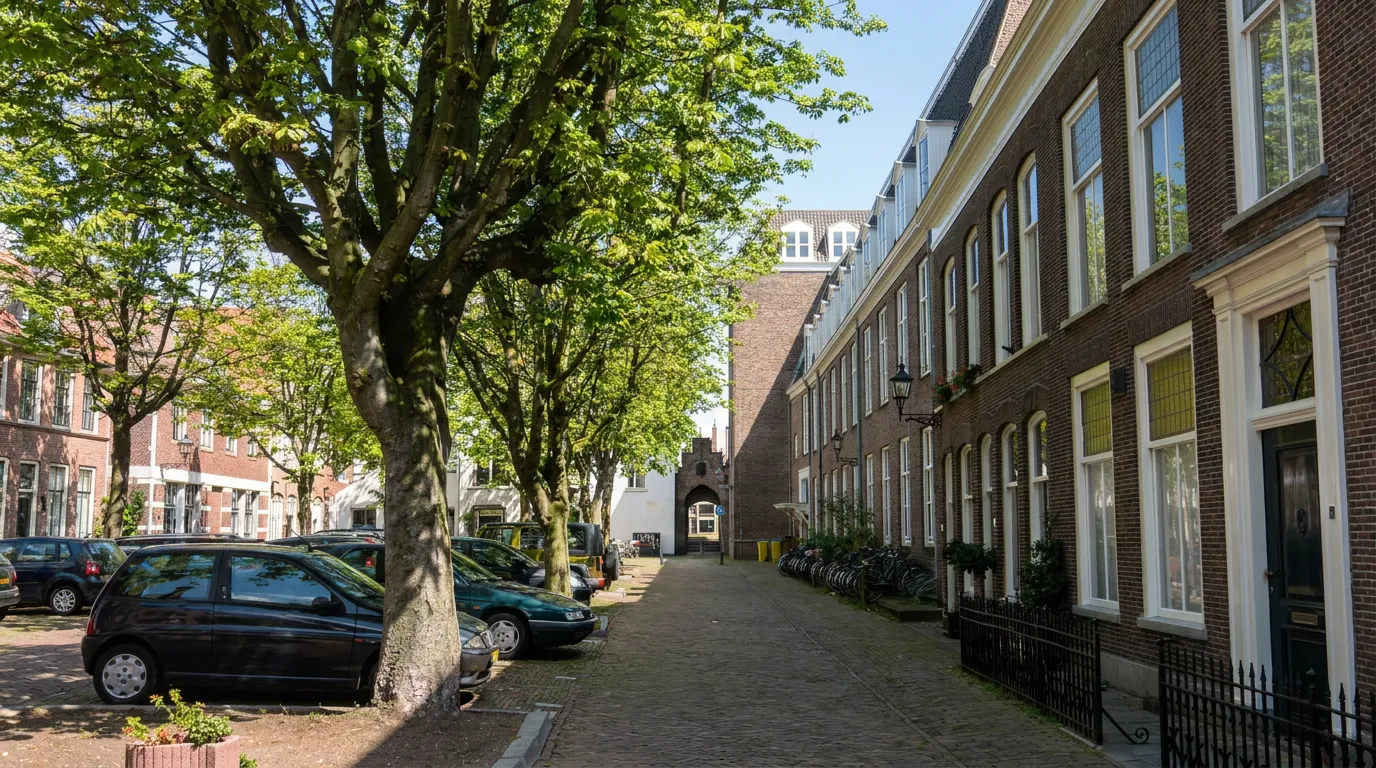
From there, the walk leads toward Beestenmarkt, a square shaded by rows of giant plane trees. Until 1972 this was a working cattle market, loud with lowing cows and the business of weekly trade. Today it's simply a square to pass through or sit in for a while, and the trees alone are worth the detour.
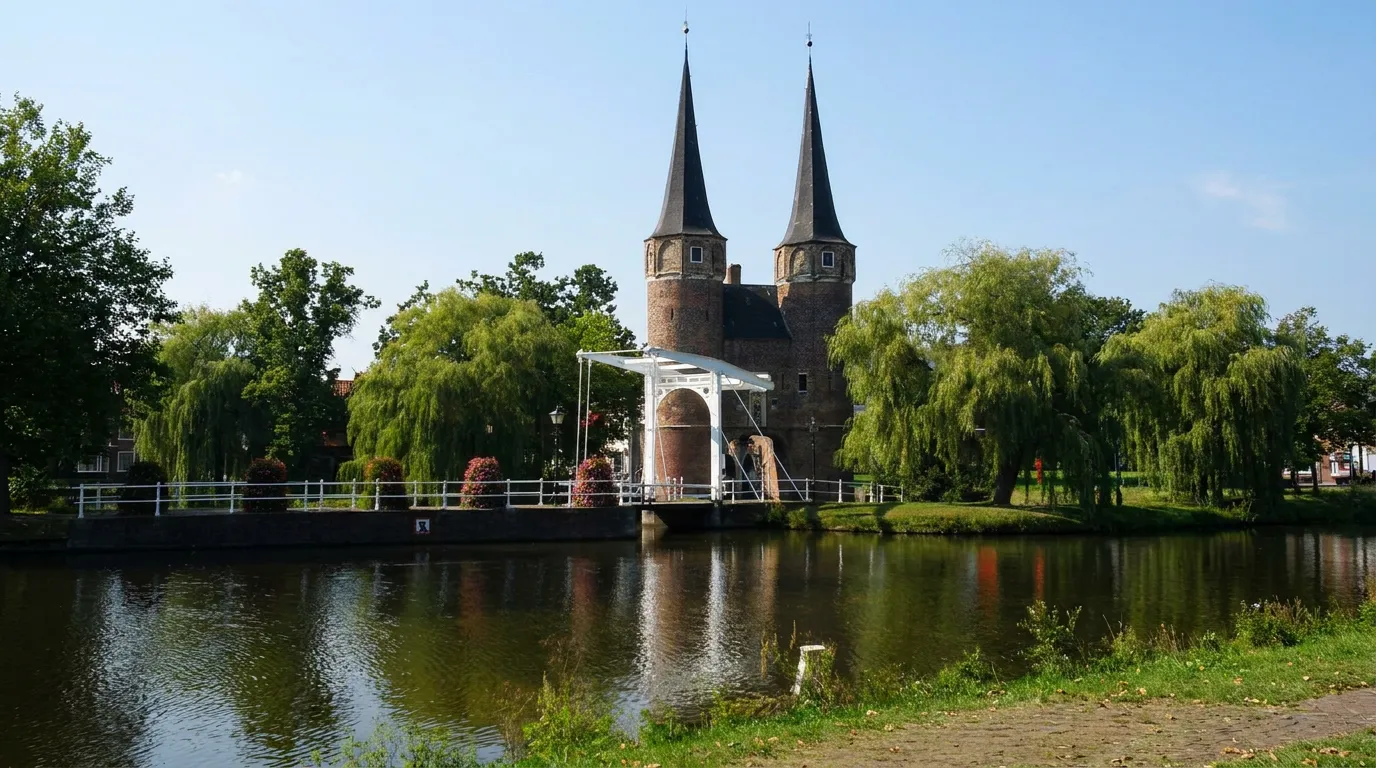
The walk's free highlight comes at the Oostpoort, the last of Delft's original city gates still standing. Built around 1400, its twin pointed towers and the small drawbridge over the water make it the most photogenic stop on the route — and seeing it, from any angle, doesn't cost a thing. The reflection in the calm canal water is best in the early morning or late afternoon light, when the towers sit still on the surface.
What ties these stops together is that they're all part of a self-guided walking route through Delft — a route that connects squares, gates and a few things most visitors miss entirely, like the Bagijnhof. You don't need a museum pass or a paid tour to see the parts of Delft that actually explain how the city came to look the way it does; you need a few hours and a willingness to look up.

.jpg)