
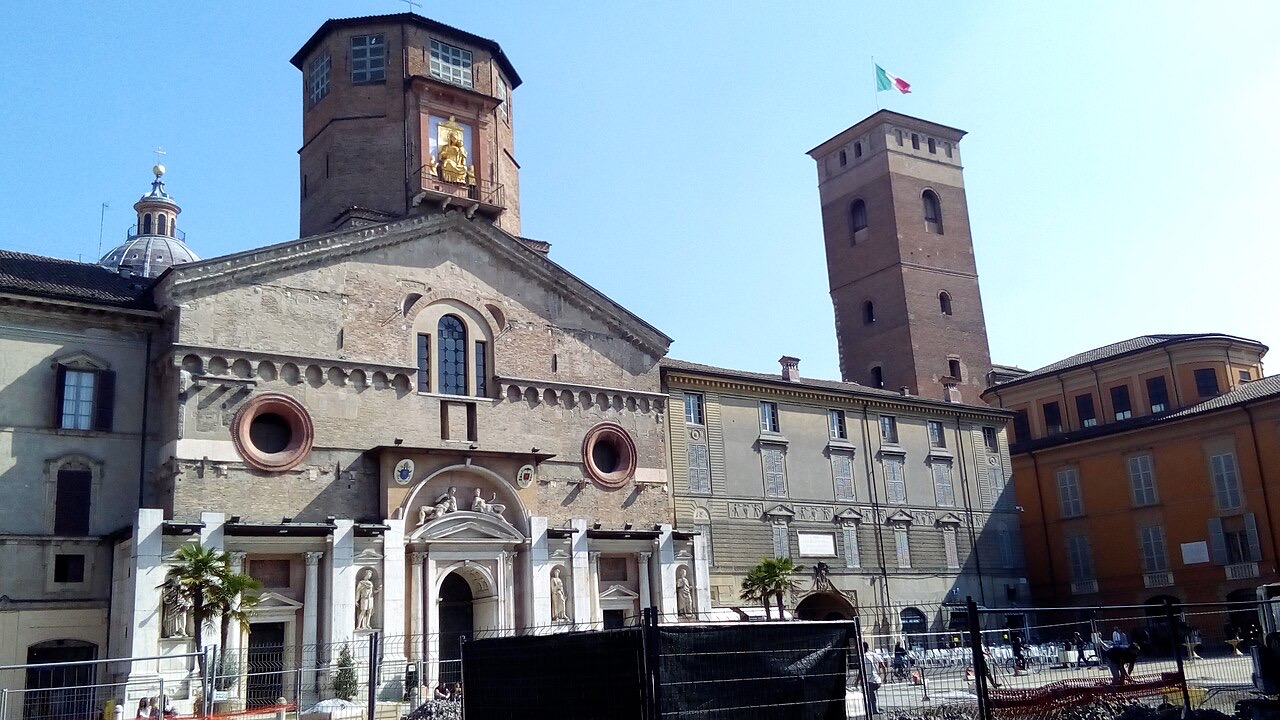
Reggio Emilia is not a city where you have to weave your way through mass tourism. It is a compact centre in Emilia-Romagna where bishops, dukes, collectors and painters have left their mark, often within walking distance of one another. Anyone wondering what to do in Reggio Emilia will find that an afternoon on foot is enough to see it: from the cathedral to a neo-Gothic fantasy building, through a ghetto quarter to the place where the city's patron saint rests.
Squares, Palaces and an Opera House
You start at Piazza Prampolini, wide open in front of the Duomo. The cathedral is dedicated to Santa Maria Assunta and is the result of centuries of rebuilding around a much older core. It has been a national monument since 1940, and it still stands at the head of the Diocese of Reggio Emilia-Guastalla.
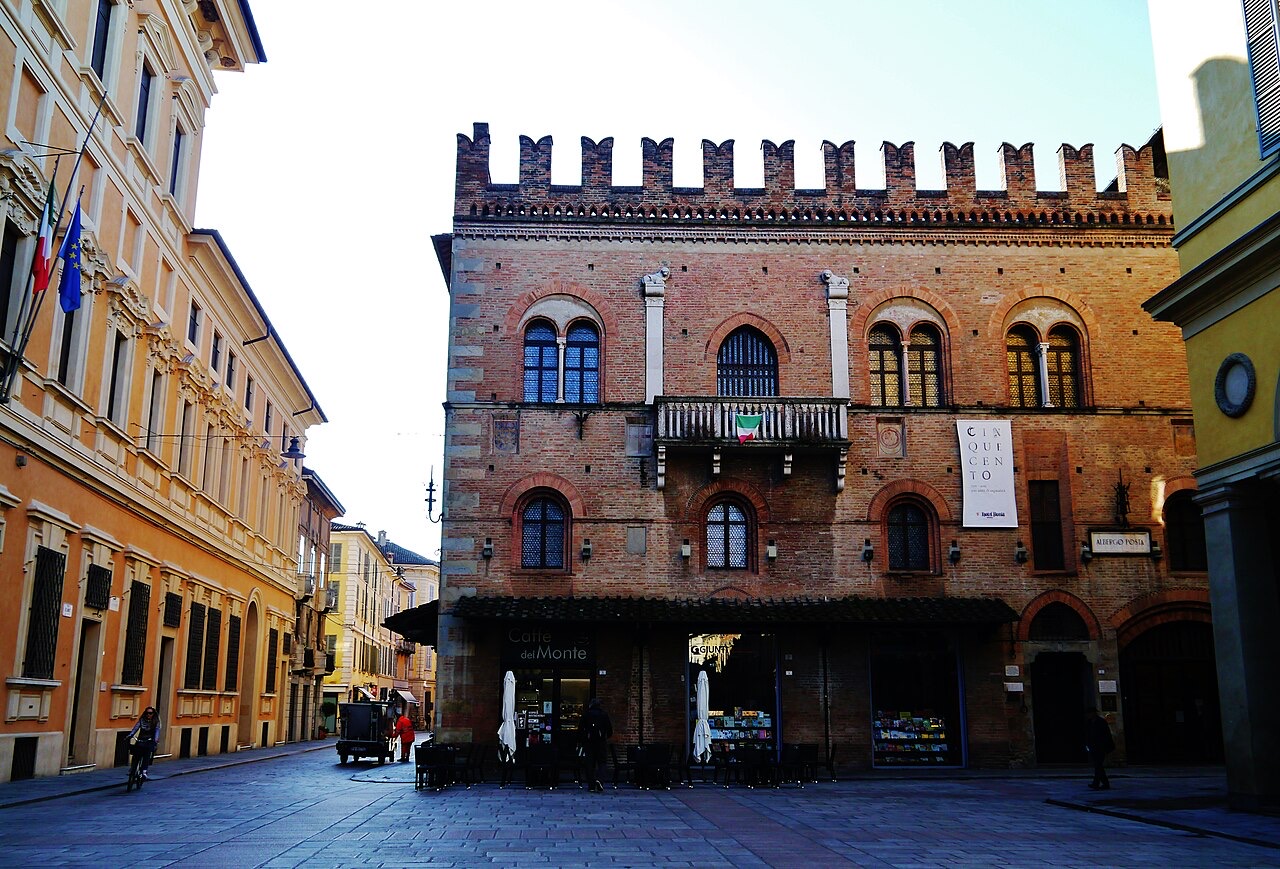
Nearby stands the Palazzo del Capitano del Popolo. From 1278 the Captain of the People had to be an outsider, and in 1280 the commune built this residence for him. The office disappeared in 1326, but the palace kept changing function. Grain and fish were once sold under its portico. A restoration completed in 1931 brought back its medieval face, and today it is a hotel.
A little further on, you can read the full name of the square by the Teatro Valli: Piazza Martiri del 7 Luglio 1960. The date is there on purpose, so that the city keeps it in view. The municipal opera house is named after Romolo Valli, and from the same square you look out onto the Galleria San Rocco and the green edge of the Giardini Pubblici.
A Painter, a Collector and the Fallen
In the park stands a monument to Antonio Fontanesi, the landscape painter from Reggio who also taught in Tokyo in the 1870s. He is honoured twice here: with the monument along Viale Leopoldo Nobili and with a separate bust by Marino Mazzacurati. That bust was a gift in 1937 from Anna and Luigi Parmeggiani.
The next remarkable building is about Luigi Parmeggiani. The Galleria Parmeggiani looks medieval, but it is nothing of the sort. The collector (1860-1945) had it built in 1924 in a fanciful Gothic-Renaissance style with French and Spanish influences, solely to house his art. Today it belongs to the Musei Civici: a house museum where three different collections come together.
At the edge of the Parco del Popolo, by Piazza della Vittoria, stands the monument to the fallen of the First World War. Sculptor Alberto Bazzoni designed its fifteen-metre block with a winged Victory on one side and a soldier on the other. It is a place to pause for a moment.
The Ghiara and the Narrow Streets of the Old Ghetto
On the narrow Via dell'Aquila stands the synagogue, not on an open square but among closely packed houses. That was not a free choice. A decree of 1671 determined where the Jews of Reggio had to live, and those few streets still carry that history with them.
Then you follow the old course of the Ghiara, now Corso Garibaldi. Along it rises the Tempio della Ghiara, a basilica of the Blessed Virgin. Remarkably, the building is owned by the municipality, while the Servites, the Servants of Mary, lead the services. Many visitors come specifically for the paintings inside.
Turn around, and the temple stands directly opposite the Palazzo Ducale. A convent first stood on that spot, until a palace for the governor of Reggio was built there in the late 18th century. In 1814 the city gave it to Duke Francis IV of Austria-Este. Today it houses the prefecture and the offices of the province.
Where the Patron Saint Rests
Closer to the Biblioteca Panizzi, things become truly everyday: laptops, newspapers and textbooks. This is the city's main public library, with branches as far as Ospizio, Rosta Nuova, Santa Croce and the Spazio Culturale Orologio. Behind the modern shelves, the Conservation and Local History department keeps a vast collection of historical and special collections.
A street like Via San Girolamo is a place of calm: the noise of the main streets fades away, and the church of Santi Girolamo e Vitale, dedicated to Jerome and Vitalis, stays modestly in the background.
The Basilica di San Prospero closes the series. Beneath the high altar rest the remains of San Prospero, the patron saint of Reggio. They were moved from a monastery outside the walls that was demolished in the 16th century during the tagliata, when buildings along some 600 metres of city wall had to make way for defence.
This article is just a taste of what Reggio Emilia has to offer. The full walk has more stops, questions and hidden details. If you really want to walk the route, choose the Reggio Emilia walk in the CityWalkGems app and let the city tell you the rest itself.
- 12 stops
- Start anywhere
- ~3,5 km route length
- ~635 m longest stretch
- about 1,5–2 h duration
- Free

